
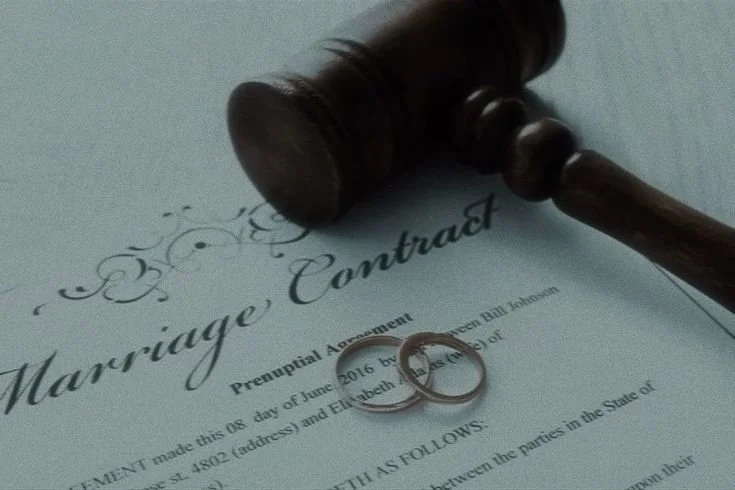
Imagine a couple married for 40 years who find themselves dividing a $100 billion fortune. It reads like a celebrity headline, yet the questions behind it are the same ones couples face when they divide a family business, investment properties, retirement accounts, or a straightforward portfolio. Understanding how California approaches these questions can help you enter the process with clearer expectations.
Fault matters less than most people expect
California is a no-fault divorce state, which means neither spouse has to prove infidelity, abandonment, or any other wrongdoing to end the marriage. Even when one spouse was unfaithful, that generally does not entitle the other to a larger share of the marital assets, because the divorce process is not designed to financially penalize a spouse for being a poor partner. There are important exceptions when financial misconduct is involved, such as hiding assets or misusing community funds, and domestic violence can also influence certain financial decisions, including spousal support.
Assets built during the marriage are usually shared
Under California law, assets acquired during the marriage are generally treated as community property, regardless of whose name is on the account or which spouse earned the money. Consider a couple who married in 1985, where one spouse founded a technology company eight years later that eventually grew to be worth billions. The founder does not necessarily own that company outright. If $100 billion of the couple’s wealth qualifies as community property, each spouse could theoretically be entitled to $50 billion in value, although separate property, trusts, marital agreements, and other factors can change that calculation.
An equal split is not the same as splitting every asset in half
A 50/50 settlement refers to the value each spouse receives, not to dividing each individual asset down the middle. Picture one spouse receiving $5 million in highly appreciated company stock while the other receives $5 million in cash. On paper, both are equally well off, but in practice their situations can look very different. The spouse holding the stock may face significant capital gains taxes when selling and remains exposed to the performance of a single company, while the spouse holding cash has immediate liquidity and the flexibility to diversify. Equal value today does not always translate into equal financial security tomorrow.
The divorce and the financial settlement can follow different timelines
California requires a minimum six-month waiting period before a divorce can be finalized, but a complex financial settlement can take considerably longer. When significant business interests, trusts, real estate, and investment holdings are involved, the process may require multiple valuations, forensic accounting, tax analysis, and extended negotiation. In certain circumstances, a couple can even become legally divorced while the details of their financial settlement are still being worked out.
Why this matters even if you are not a billionaire
These principles apply well beyond headline-making fortunes. Whether a couple is dividing a business, a set of rental properties, retirement accounts, or a modest investment portfolio, the same planning questions come into play.
Looking beyond “my fair share”
Many people begin with one question: “Am I getting my fair share?” A more useful one may be: “Will what I’m receiving actually support the life I want to build afterward?” A settlement that looks equal on paper can create very different financial realities for each person, and understanding that difference before signing an agreement can matter far more than negotiating for one more percentage point.
